Specialist consultation
Assessment of orthopedic problems and diagnosis, together with advice on further treatment.
Miren Polyclinic
Orthopedics focuses on preserving the function of the body and on preventing or treating pain in the joints, spine and muscles, as well as sports injuries and degenerative changes.
The areas most commonly monitored and treated include herniated discs, osteoarthritis, bursitis and injuries of the ligaments and meniscus. A multidisciplinary approach makes a comprehensive rehabilitation program possible. Consultations are carried out by Dr Nikola Pješčić and Dr Nemanja Bosančić, and no referral is needed.

Prices
| Service | Price |
|---|---|
| Orthopedist consultation (Dr Nikola Pješčić) | 8.000 RSD |
| Orthopedist consultation (Dr Nemanja Bosančić) | 8.000 RSD |
| Consultation + ultrasound (Dr Nemanja Bosančić) | 10.500 RSD |
See the current price list here.
Preserving mobility and strength
Assessment of orthopedic problems and diagnosis, together with advice on further treatment.
Mobility assessment, X-ray analysis and a treatment plan for sciatica, lower back pain, cervical syndrome and spondylosis.
Treatment of degenerative and inflammatory joint diseases, with advice on prevention and physical recovery.
Treatment of strains, ruptures, sprains and injuries of the meniscus and ligaments, with post-traumatic rehabilitation.
Precise examination of muscles, tendons and joints (soft tissue) for an accurate diagnosis and for monitoring the condition.
Preventive check-ups, advice on deformities (flat feet, scoliosis) and the choice of orthoses and insoles.

Specialist in orthopedic surgery and traumatology
View profile
Specialist in orthopedic surgery with traumatology
View profileAn orthopedist deals with the bones, joints, tendons, ligaments and muscles, in other words everything that makes movement possible. Athletes come after an injury, but so do people whose knee, hip, shoulder or back pain has developed gradually. A consultation is worthwhile if you have:
Recurring pain should not be endured for long or treated with painkillers alone. A timely consultation helps to find the cause of the pain and to direct treatment at it.
At Miren Medic Polyclinic consultations are carried out by Dr Nikola Pješčić, specialist in orthopedic surgery and traumatology, and Dr Nemanja Bosančić, specialist in orthopedic surgery with traumatology. The consultation begins with a conversation about how the pain started, whether there was an injury, which movements make it worse and how it affects your work, sport and daily activities.
The orthopedist then examines the painful area: range of movement, strength, joint stability and points of tenderness, with specific tests for the knee, shoulder, hip or spine, and reviews your earlier scans. With Dr Nemanja Bosančić the consultation can be complemented, where needed, by an ultrasound of the muscles, tendons and joints in the same appointment. If an X-ray or MRI is needed, the orthopedist recommends it and explains why.
Based on the findings, the orthopedist proposes treatment: offloading and rest, medication, a brace or insoles, targeted exercises and physical therapy. When surgical treatment is needed, the orthopedist explains the reasons and advises on the next steps.
Bring all the scans and results you have: X-ray, MRI, CT or ultrasound, with the report and, if available, the disc or a link to the images, as well as discharge letters and reports after any operations. The orthopedist needs to see the images themselves, not only the report.
Wear clothes that make the painful area easy to examine, for example shorts for the knee or a sleeveless top for the shoulder. If you wear insoles, a brace or a back support, bring them, and for foot or knee problems also bring the shoes you wear every day. Write down when the pain began, what makes it worse and which medicines have helped so far.
Recovery after an injury or during treatment for osteoarthritis takes time and active participation: the recommended exercises should be done regularly, at home as well. At a follow-up consultation the orthopedist assesses how the condition is changing and adjusts the plan where needed, for example by gradually increasing the load or changing the therapy.
A fresh, serious injury should not wait for a scheduled appointment at the polyclinic. Go to the emergency department straight away or call an ambulance (194) if:
After treatment in the emergency department, check-ups, monitoring of recovery and rehabilitation can continue with an orthopedist.
You should see an orthopedist for joint pain that lasts longer than a few weeks or keeps returning, knee swelling and instability, shoulder pain, back pain that spreads into a leg or arm, after sports injuries and sprains that do not settle, and for deformities of the feet and spine.
No referral is needed for an orthopedic consultation at Miren Medic. You book your appointment directly, online or by phone.
An orthopedic consultation with Dr Nikola Pješčić is 8.000 RSD, and with Dr Nemanja Bosančić 8.000 RSD. A consultation with ultrasound with Dr Nemanja Bosančić is 10.500 RSD. All prices are listed in the price list.
Bring your X-rays and MRI, CT or ultrasound results, ideally with the disc or a link to the images, doctors' reports and a list of the medication you take. If you wear insoles or a brace, bring them too, and wear clothes that make the painful area easy to examine.
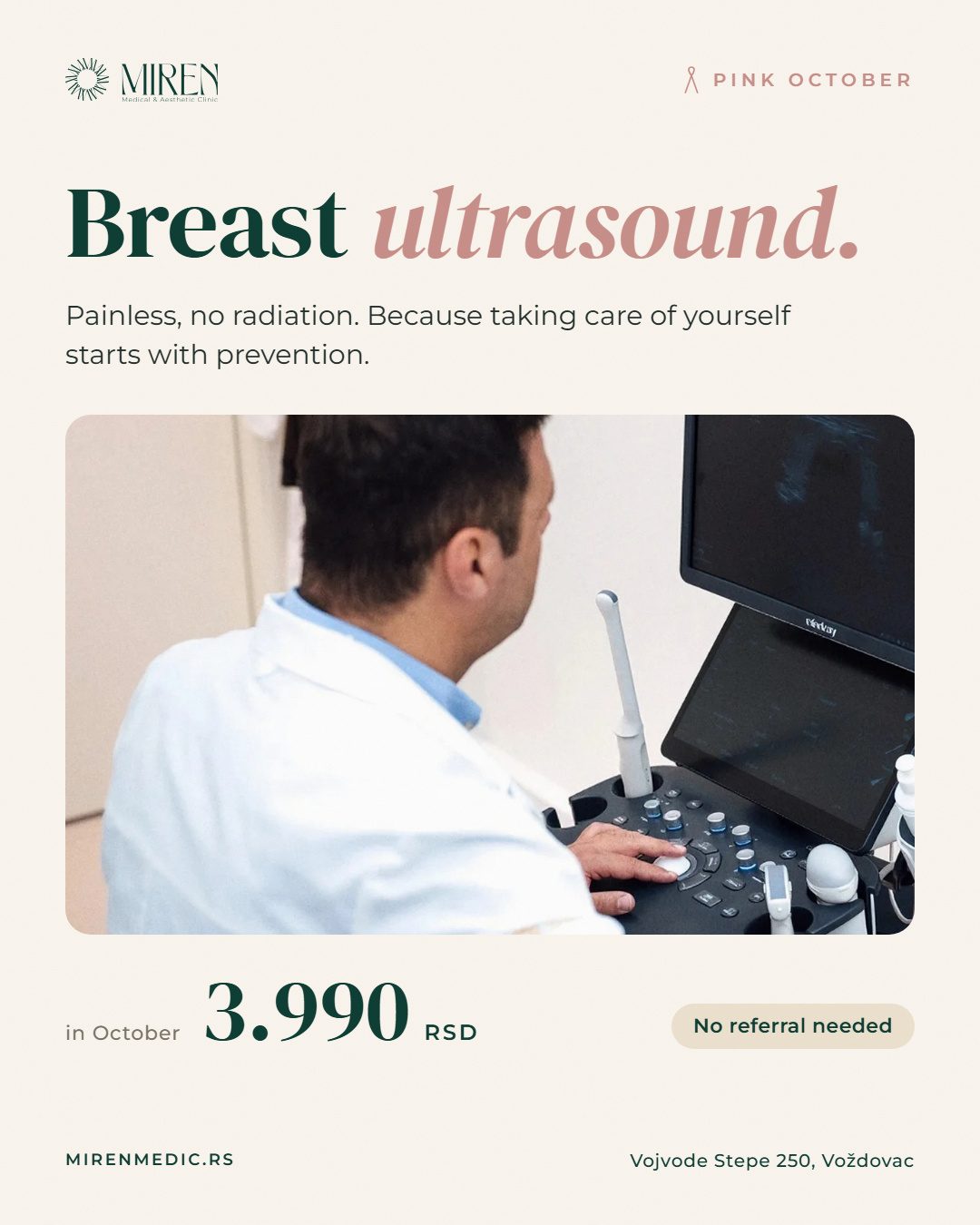
With Dr Nemanja Bosančić the consultation can be complemented, where needed, by an ultrasound of the muscles, tendons and joints in the same appointment. Ultrasound is useful for injuries of muscles, tendons and ligaments, bursitis and swelling around a joint, while for bones and changes deep inside a joint the orthopedist recommends an X-ray or MRI where needed.
Yes. Most orthopedic complaints, such as osteoarthritis, bursitis, tendinitis, sprains and back pain, are treated without surgery: with offloading, medication, braces or insoles, exercises and physical therapy. Surgery is considered for certain injuries and when other treatments do not have a sufficient effect.