
Bedridden and people with limited mobility
Patients who lie in bed or move with someone else's help, for whom transport to a medical facility takes a car, a companion and a lot of time.
Urinary catheter change at home is one of the services the Miren Medic polyclinic provides at your home address. For a person with a long-term catheter, every trip to a medical facility for a change means transport, waiting and a day of organisation for the whole family. With us, the change is arranged by phone or message, and the polyclinic's medical staff come to you.
This page describes what the change looks like, what to prepare, what to watch for between two changes and when a urologist is needed.
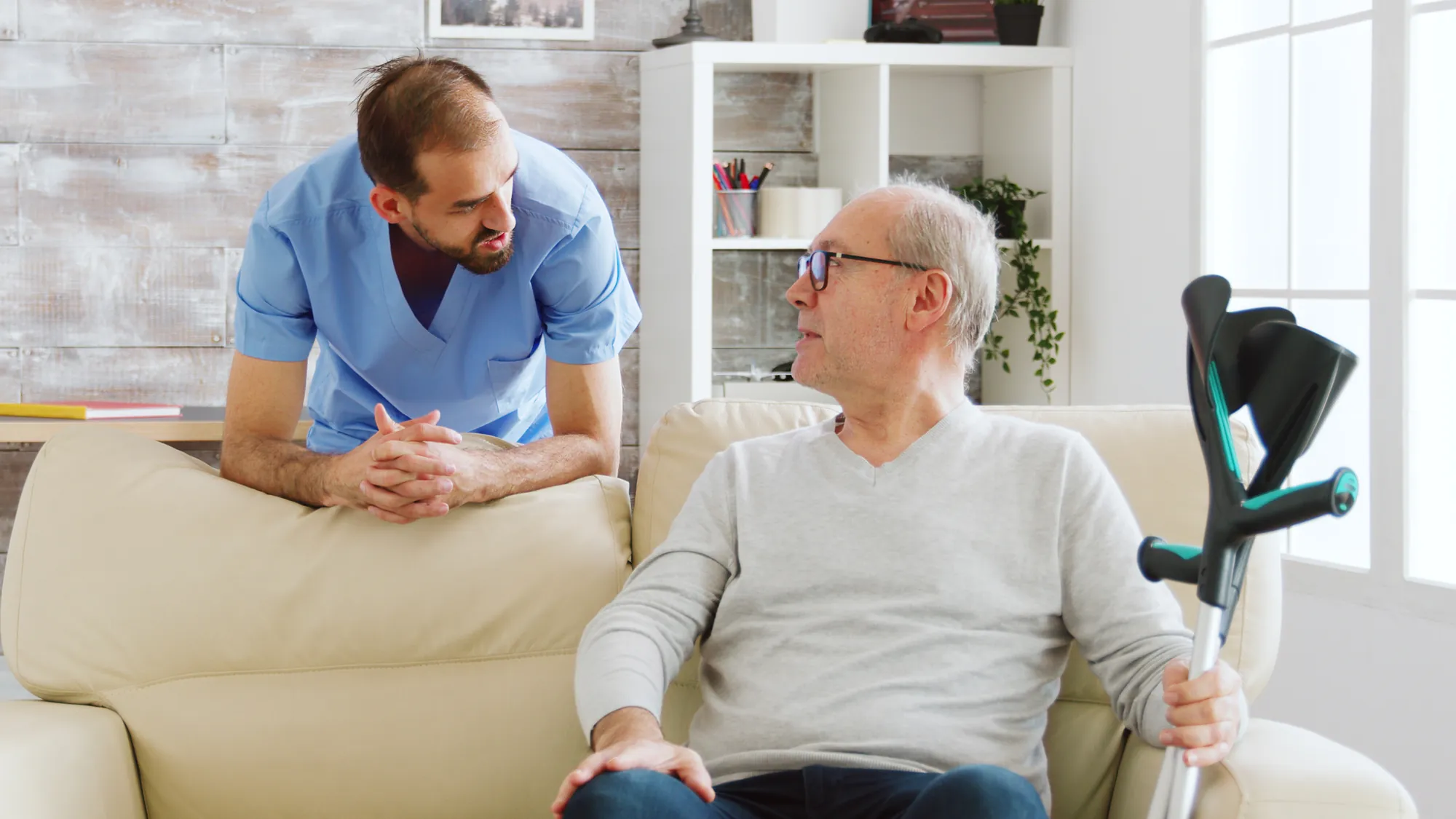
A long-term urinary catheter is changed regularly, for months or years. That is why it means the most to those for whom every trip out of the house is an undertaking.
Patients who lie in bed or move with someone else's help, for whom transport to a medical facility takes a car, a companion and a lot of time.
Patients discharged home with a catheter, when the discharge letter prescribes a change or a check-up.
When the catheter is part of long-term care, and a trip to the waiting room carries more risk than benefit.
When the children work or live far away, and the parent needs regular and reliable care.
The change is done following the rules of asepsis, with sterile material, because a urinary tract infection is the most common complication of a long-term catheter. The old catheter is removed after the balloon that holds it in the bladder has been emptied. Then a new, sterile catheter is inserted, the balloon is filled with sterile water, the urine is checked to be draining and the new bag is attached below the level of the bladder.
The whole procedure is short, and the patient stays in their own bed. Before the change, tell us what kind of catheter is in place now, when it was last changed and whether there were problems with previous changes, such as pain, bleeding or difficult insertion.
How often it is changed is decided by a doctor, according to the type of catheter and the manufacturer's instructions. Latex catheters are, as a rule, changed more often than silicone ones. A catheter is also changed earlier than planned if it stops draining urine, if urine leaks around the catheter or if the doctor changes it because of an infection.
These signs do not always mean something serious, but they are a reason to get in touch rather than wait for the regular appointment.
The same procedure, a different day for the patient and the family.
| At your home address | At a medical facility | |
|---|---|---|
| Transport | Not needed | A car or medical transport, often with a companion |
| Waiting | Appointment arranged by phone | Waiting room |
| Where the patient is | In their own bed | At the appointment, after the journey |
| Family | Can stay with the patient | The companion waits outside |
| When a urologist is needed | The examination is booked at the polyclinic | Urologist at the polyclinic, no referral needed |
A catheter change is a routine part of care, but repeated infections, blood in the urine, frequent blockages or difficult insertion call for an examination by a urologist. At the Miren Medic polyclinic, examinations are carried out by Dr Aleksandar Lazić, specialist in urology, and no referral is needed for the examination.
If the illness or condition for which the catheter was inserted changes, the urologist assesses whether a long-term catheter is still the best solution.
Prices
The price of a service at your home address depends on the service and the location. In the polyclinic's price list, a medical technician's visit is from 2.000 RSD to 5.000 RSD, and a doctor's visit from 15.000 RSD. You get the exact amount for the catheter change when arranging the appointment.
| Service | Price |
|---|---|
| Medical technician's visit | 2.000 to 5.000 RSD |
| Doctor's visit to your home address | from 15.000 RSD |
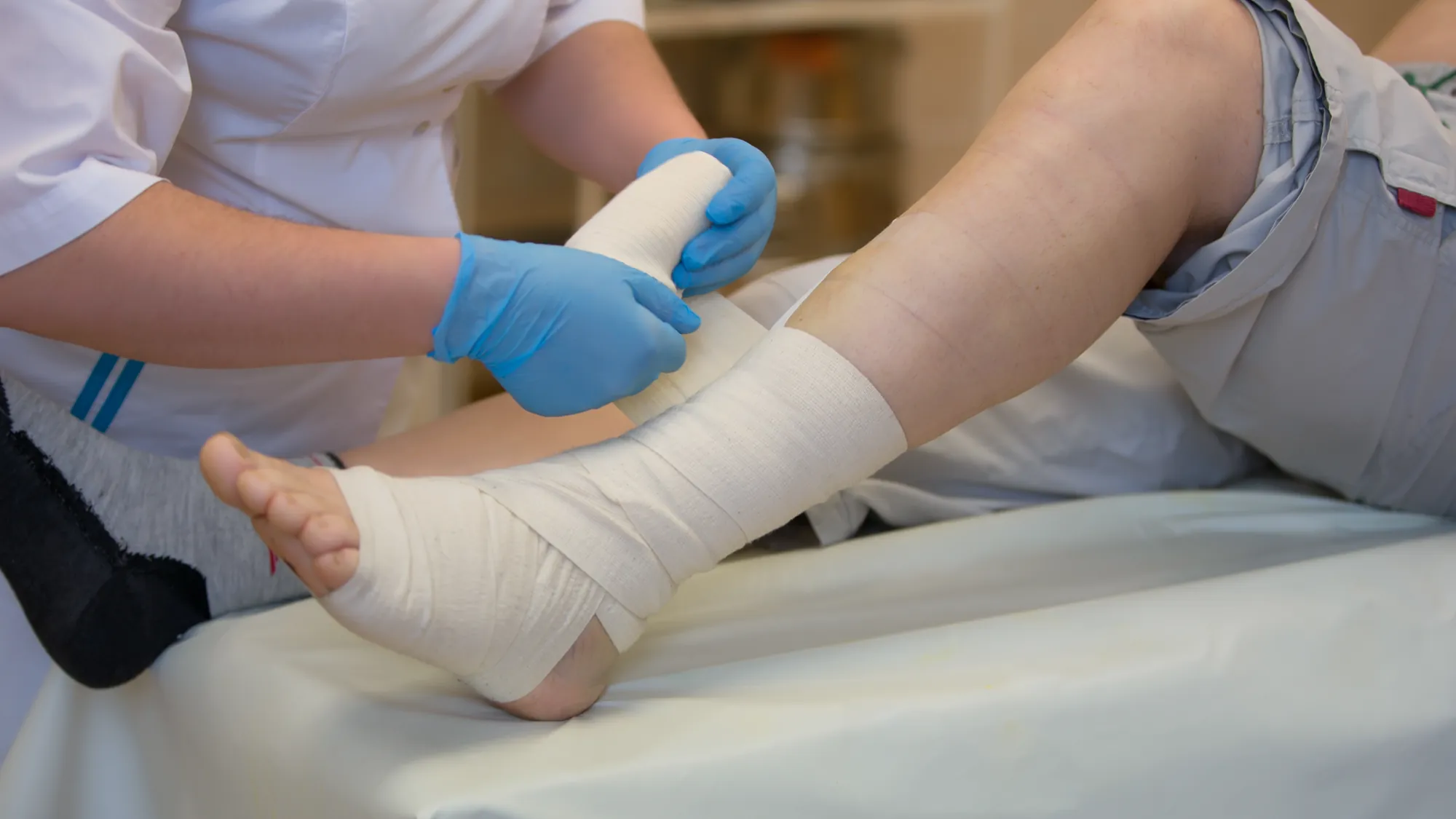 Wound dressing at home
Post-operative wounds, wounds after an injury and wounds from lying down for a long time, as prescribed by a doctor.
Wound dressing at home
Post-operative wounds, wounds after an injury and wounds from lying down for a long time, as prescribed by a doctor.
 Physiotherapy at home
A portable device at your address, for pain and stiffness when coming in is difficult.
Physiotherapy at home
A portable device at your address, for pain and stiffness when coming in is difficult.
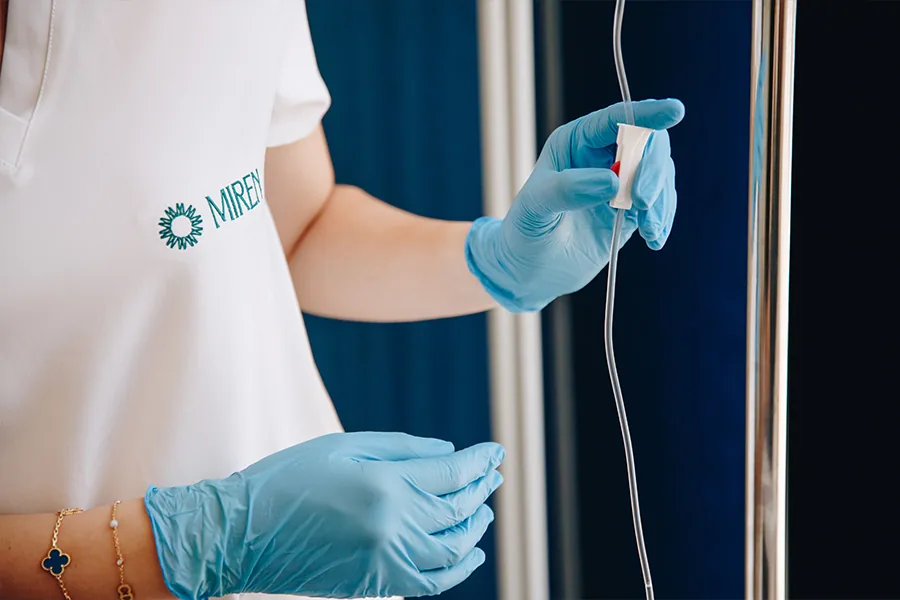 IV drip at home
Prescribed therapy in your home, hotel or workplace.
IV drip at home
Prescribed therapy in your home, hotel or workplace.
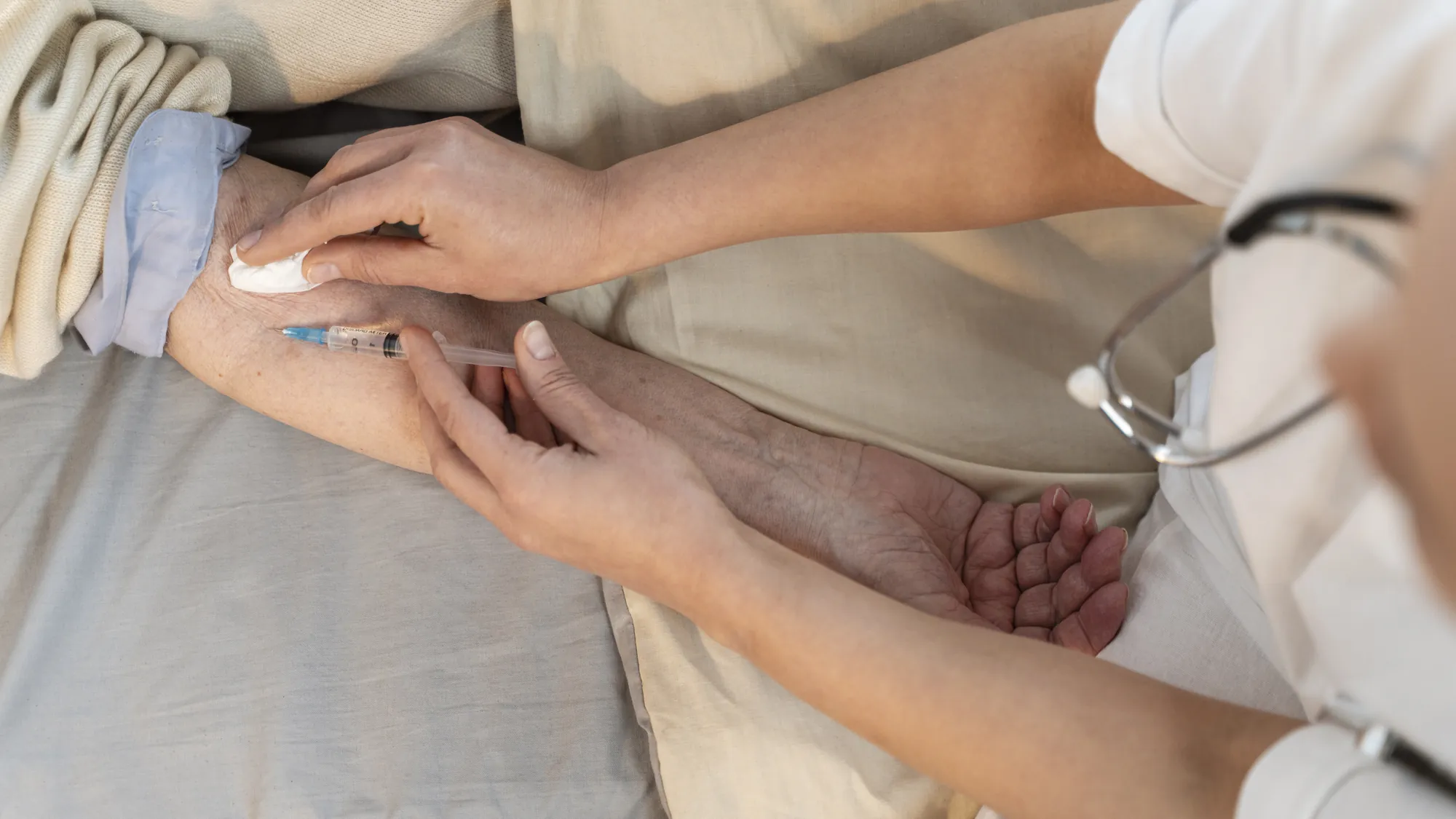 Injections at home
Intramuscular (i.m.) therapy prescribed by a doctor, at your address.
Injections at home
Intramuscular (i.m.) therapy prescribed by a doctor, at your address.
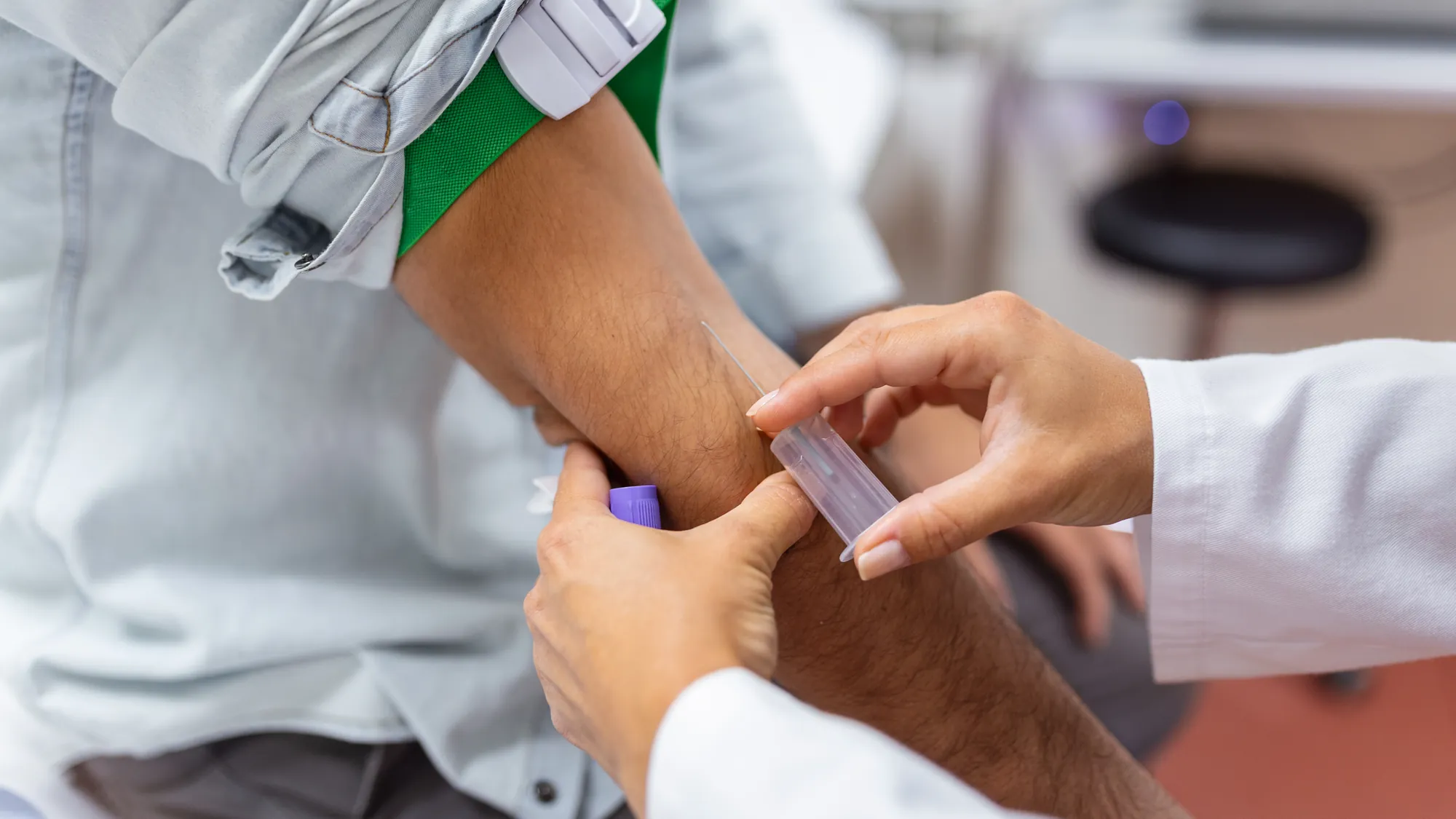 Blood test at home
Laboratory tests at your home address, the samples are taken to the polyclinic's laboratory.
All home care services
Doctor's home visit, specialist examinations and ultrasound at your home address, visit prices.
Blood test at home
Laboratory tests at your home address, the samples are taken to the polyclinic's laboratory.
All home care services
Doctor's home visit, specialist examinations and ultrasound at your home address, visit prices.
Call the polyclinic or send a message on WhatsApp, describe what is needed and we will agree an appointment at your address. If you are not sure whether a medical technician is enough for your case or a doctor is needed, tell us that too: together we will choose the right step.