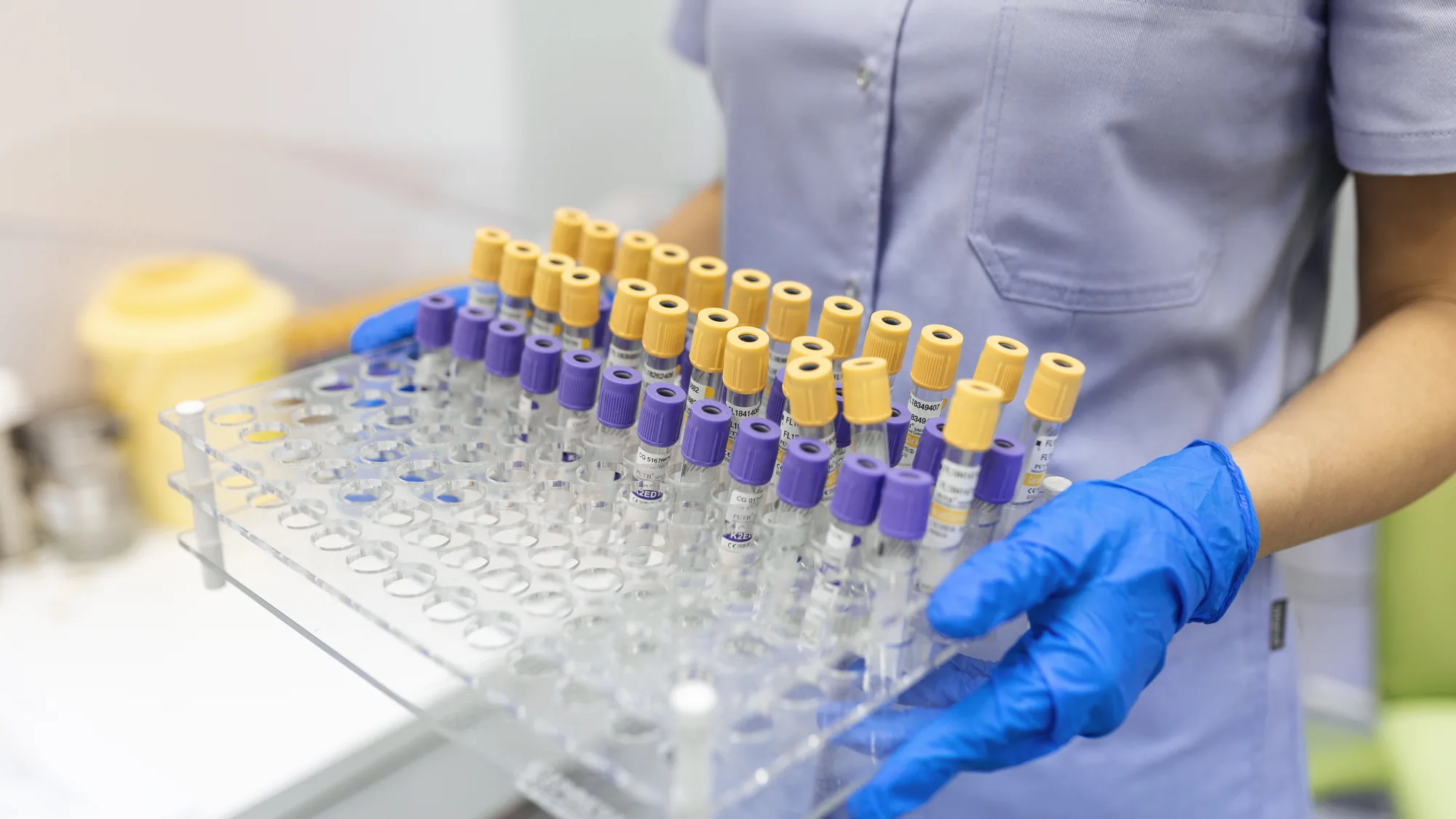
Blood Count Interpreter: Enter Your Results and See What They Mean
The laboratory report arrives by e-mail, there is an asterisk or an arrow next to half the lines, and nobody has explained what any of it means. This interpreter does what you would otherwise search the forums for: enter the values from your report and it compares them with indicative adult reference ranges, marks what is low or high, explains what such a deviation most often means and says which doctor it makes sense to see. It covers the complete blood count and the most common biochemistry: glucose, lipids, CRP, uric acid, creatinine, liver enzymes, iron, ferritin and vitamin D.
Blood count and biochemistry interpreter
Complete blood count
Biochemistry
Enter at least one value from your report. Fields left empty are skipped.
Reference ranges are indicative for adults and differ between laboratories. The range printed on your own report is the one that counts.
What the complete blood count shows
The complete blood count (CBC) counts three kinds of cells in the blood. White blood cells are the immune system's army and rise when the body fights an infection or inflammation. Red blood cells carry oxygen; with them the report measures haemoglobin, the protein that binds that oxygen, and haematocrit, the share of red cells in the blood volume. Platelets are the cells in charge of clotting.
Three small indices, MCV, MCH and MCHC, describe the size and colour of the red cells, and they are what most often reveals the cause of an anaemia before any further test: small, pale red cells point to iron deficiency, large ones to vitamin B12 or folate deficiency. That is why a blood count is never read line by line but as a whole.
How to read a deviation
| Parameter | Low most often means | High most often means |
|---|---|---|
| White blood cells | viral infection, some medicines, bone marrow disease | bacterial infection, inflammation, stress, smoking |
| Haemoglobin | anaemia (most often iron deficiency), bleeding, pregnancy | dehydration, smoking, lung disease |
| MCV | iron deficiency, thalassaemia | B12 or folate deficiency, liver, alcohol |
| Platelets | viruses, medicines, liver disease, autoimmune disease | inflammation, iron deficiency, recovery after infection |
| Ferritin | depleted iron stores | inflammation, liver disease, iron overload |
Biochemistry: glucose, lipids, CRP, kidneys and liver
Biochemistry does not count cells but measures substances dissolved in the blood. Fasting glucose and HbA1c reveal prediabetes and diabetes, the lipid profile (total, LDL and HDL cholesterol, triglycerides) measures the risk to the heart and blood vessels, CRP is the fastest marker of inflammation, creatinine speaks for the kidneys and AST and ALT for the liver. Iron and ferritin are requested for fatigue and anaemia, and vitamin D is low in most people in Serbia over the winter.
For most of these values there is no "normal" and "abnormal", only targets that depend on you: an LDL that is fine for a healthy thirty-year-old is too high for someone with diabetes or a previous heart attack. That is why the interpreter marks a deviation from the general reference range, while your target is set by the doctor. If glucose is borderline, work out the average glycaemia in our HbA1c calculator and insulin resistance in the HOMA calculator.
When it is time to see a doctor
A slight deviation of a single value, especially one that does not match how you feel, is often chance or the effect of a cold, a workout or a meal, and is checked with a repeat test. The following values do not wait for a repeat:
- haemoglobin below 100 g/L, or any anaemia with dizziness, palpitations and breathlessness
- platelets below 100 or white cells below 3 or above 15 ×10⁹/L
- CRP above 50 mg/L, especially with a fever
- fasting glucose of 7.0 mmol/L or more
- creatinine above the reference range, because a kidney does not hurt until it is late
- AST or ALT more than three times the upper limit
- ferritin below 15 µg/L in women, because such an iron deficiency rarely resolves on its own
At the Miren Medic polyclinic the blood count and iron stores are interpreted by a haematologist, glucose and lipids by an endocrinologist, and liver enzymes by a gastroenterologist. Samples are taken in our laboratory without a referral, and when iron is low and tablets do not help, a high-dose iron infusion is available.
How to prepare for a blood test
- Blood is taken in the morning after 8 to 12 hours without food; water is allowed, coffee and chewing gum are not.
- No alcohol and no hard training the day before: both change liver enzymes, CRP and uric acid.
- Do not stop the medicines you take regularly, but list them; iron and biotin supplements are paused as agreed with the doctor.
- Serum iron is highest in the morning and falls during the day, which is why ferritin is considered more reliable.
- If you are ill or were in the previous two weeks, wait: an infection changes white cells, platelets, CRP and ferritin.
Examination prices
| Service | Price |
|---|---|
| Hematologist consultation (Dr Danijela Leković) | 12.000 RSD |
| Follow-up consultation | 10.000 RSD |
| Endocrinologist consultation (Dr Zorana Đuran) | 7.000 RSD |
| Internist consultation (Dr Andreja Kovačević) | 6.000 RSD |
Frequently asked questions
What does an asterisk or an arrow next to a value on the report mean?
It marks a value outside the laboratory's reference range. That alone is not a diagnosis: small deviations are common and many are transient. What matters is how large the deviation is and whether it fits the other values and your symptoms.
What are the normal blood count values in adults?
Indicatively: white cells 4 to 10 ×10⁹/L, haemoglobin 120 to 155 g/L in women and 135 to 175 g/L in men, platelets 150 to 400 ×10⁹/L, MCV 80 to 100 fL. Every laboratory prints its own range and that range is the one that counts.
What is the most common cause of anaemia?
Iron deficiency, especially in women of reproductive age because of heavy periods. It is recognised by low ferritin and small, pale red cells (low MCV and MCH). Other causes are vitamin B12 and folate deficiency, chronic inflammation and kidney disease.
Do high white blood cells mean something serious?
Most often not: they rise with any infection, after exertion, with stress and in smokers. Worrying are very high values, persistently high values without a clear reason, or high white cells with low red cells and platelets. Those cases need a haematologist.
Which doctor should I take the report to?
The blood count, iron and ferritin are read by a haematologist; glucose, cholesterol and triglycerides by an endocrinologist or internist; CRP, kidney parameters and vitamin D by a general practitioner; liver enzymes by a gastroenterologist. If several values are out of range, the best start is a general practitioner or internist who will direct you.