Hyperpigmentation and Dark Spots on the Face: Causes and How to Remove Them
Hyperpigmentation is among the most common aesthetic and dermatological concerns of our time. It is a skin condition in which there is increased production or uneven distribution of melanin, the pigment responsible for skin colour. When melanin synthesis is disrupted, hyperpigmentation appears: darker patches that disturb the evenness of the complexion and the freshness of the skin.
Melanin is produced in cells called melanocytes, which are located in the basal layer of the epidermis. When the number of melanocytes increases or they become overactive, hyperpigmentation appears, which may be superficial or deeper, localised or widespread.
Causes of hyperpigmentation
Numerous factors contribute to the appearance of hyperpigmentation:
- Sun exposure, the most common cause of hyperpigmentation,
- Hormonal changes during pregnancy or the menopause, or with the use of contraceptive pills,
- Inflammation, scarring and skin injuries,
- Skin ageing and genetic predisposition,
- Medicines and cosmetic products that increase photosensitivity.
Given that hyperpigmentation is the result of complex processes within the skin, every treatment must be individually tailored, because no two cases of hyperpigmentation are the same.
The most common types of hyperpigmentation
Lentigo
Lentigo is a localised form of hyperpigmentation that appears as flat, sharply demarcated macules, oval or round in shape, ranging in colour from light brown to dark brown. Unlike freckles (ephelides), lentigines do not change in intensity with sun exposure, which makes them a more stable type of pigmentation.
Lentigo solaris, also known as solar hyperpigmentation, results from chronic exposure to UV radiation. It appears most often on the backs of the hands, the forearms, the face and the décolletage, and an increased number of melanocytes can be seen in the basal and suprabasal layers of the epidermis.
Chloasma
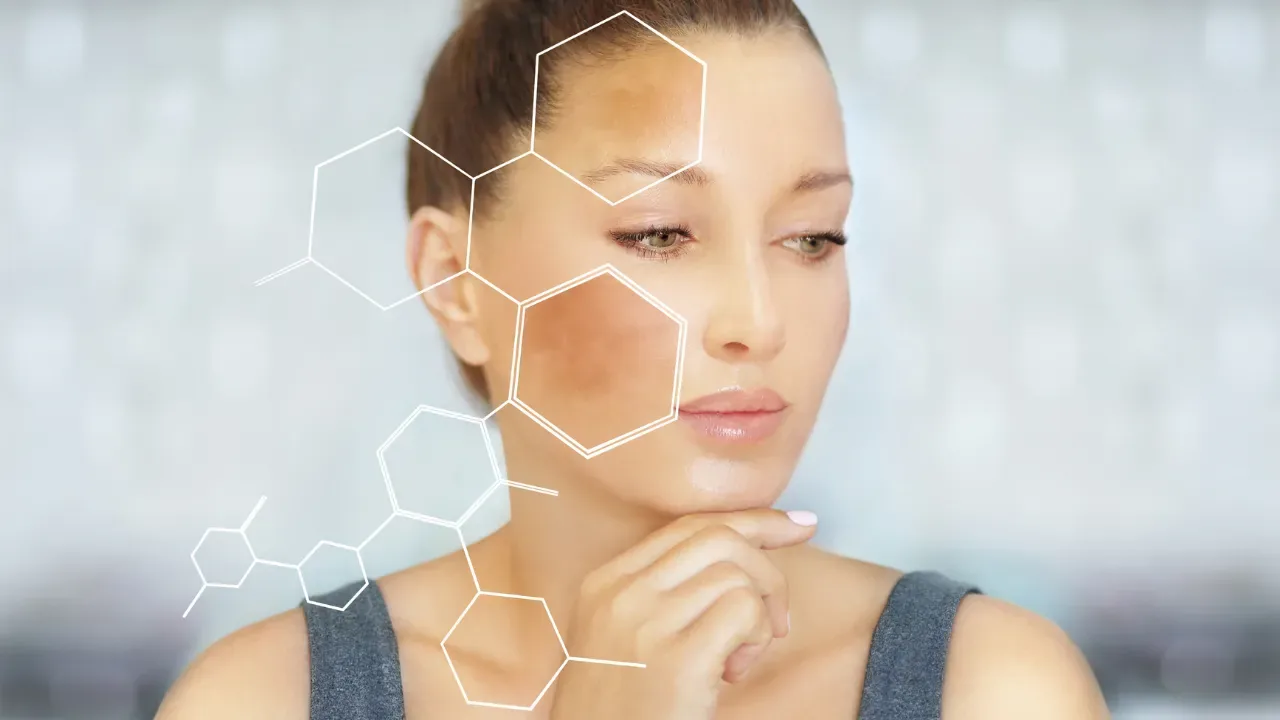
Chloasma or melasma is among the most common forms of facial hyperpigmentation. It occurs in women, particularly during pregnancy or with the use of hormonal contraception, which is why it is often called the “mask of pregnancy”.
This type of hyperpigmentation is hormonal in origin and is linked to the action of oestrogen and progesterone and to a mild imbalance in ovarian function. The changes are usually symmetrical and localised on the cheeks, forehead, nose and upper lip, and they may become more pronounced during the summer months.
Treatment of hyperpigmentation
Treating hyperpigmentation requires patience, consistency and a professional approach. At Miren Polyclinic we use a combined therapeutic approach that includes topical treatments, laser therapy and adequate protection from UV radiation.
Topical treatment
Topical treatment of hyperpigmentation involves the use of preparations that inhibit melanin synthesis and reduce existing patches. The active substances most often used are:
- hydroquinone,
- kojic acid,
- azelaic acid,
- retinoids and
- vitamin C.
These components act on melanin synthesis and lead to the gradual fading of hyperpigmentation, so that the complexion becomes more even and the skin looks healthier. The key to maintaining results is daily photoprotection with high SPF creams (50+), because UV rays activate melanocytes and can trigger hyperpigmentation again.
Laser therapy
Laser therapy for hyperpigmentation is the most precise and most effective method in modern dermatology. At Miren Polyclinic we use the PicoWay, Nordlys and Lumecca lasers, which act selectively on melanin, breaking the pigment down into microscopic particles without damaging the surrounding tissue.
Through this process hyperpigmentation gradually lightens while at the same time skin texture improves, the formation of new collagen is stimulated and an even, healthy complexion is restored. Laser treatments give the best results when combined with chemical peels, mesotherapy or biological serums, which renew the skin further.
Prevention and maintaining results
Preventing hyperpigmentation is key to the long term health and appearance of the skin. Regular use of photoprotective products, avoiding the sun during periods of high UV index, proper skincare and periodic dermatological treatments prevent hyperpigmentation from forming again.
At Miren Polyclinic, every patient receives an individual treatment plan for hyperpigmentation, based on their skin type, the cause of the pigmentation and the depth of the pigment. In this way we provide personalised, safe and effective treatment for every type of hyperpigmentation.
Conclusion
Hyperpigmentation can have a significant effect on confidence, but with the modern methods used at Miren Polyclinic, reducing and removing it becomes a realistic goal. By combining expert diagnosis, laser technology and proper skincare, an even, radiant and healthy complexion can be achieved.
Address hyperpigmentation with professional help
We successfully treat pigmentation and patches on the skin with the PicoWay and Lumecca lasers. Book a consultation for an assessment of your skin.