Fertile Days and Ovulation: How to Recognize and Calculate Them
Medically reviewed by: Prof. Dr Snežana Rakić, specialist in gynecology and obstetrics.
If you are planning a pregnancy, knowing your own cycle is the first and most important step. For a healthy couple, the chance of conceiving within a single cycle is around 20 to 25%, but only if intercourse takes place at the right moment, during what is known as the fertile window. In this article we explain what ovulation is, how to calculate your fertile days, which signs can help you recognize them and when it is time to see a gynecologist.
What is ovulation?
Ovulation is the moment in the menstrual cycle when a mature follicle on the ovary ruptures and releases an egg, which then enters the fallopian tube where it can be fertilized. The released egg survives only 12 to 24 hours, and that is precisely why pinpointing the moment of ovulation matters so much for conception.
In women with a 28 day cycle, ovulation most often occurs around day 14, but that is only an average, not a rule. Cycle length varies from woman to woman, and even from month to month in the same woman. What is relatively stable is the second half of the cycle (the luteal phase), which almost always lasts about 14 days. This means that ovulation occurs approximately 14 days BEFORE the start of the next period, not 14 days after the previous one.
When are the fertile days?
The fertile window covers about 6 days of the cycle: the 5 days before ovulation and the day of ovulation itself. The reason is simple, sperm can survive in the female reproductive tract for up to 5 days, while the egg lives for up to 24 hours. The highest probability of conception is in the last 2 to 3 days before ovulation and on the day of ovulation itself.
How to calculate your fertile days
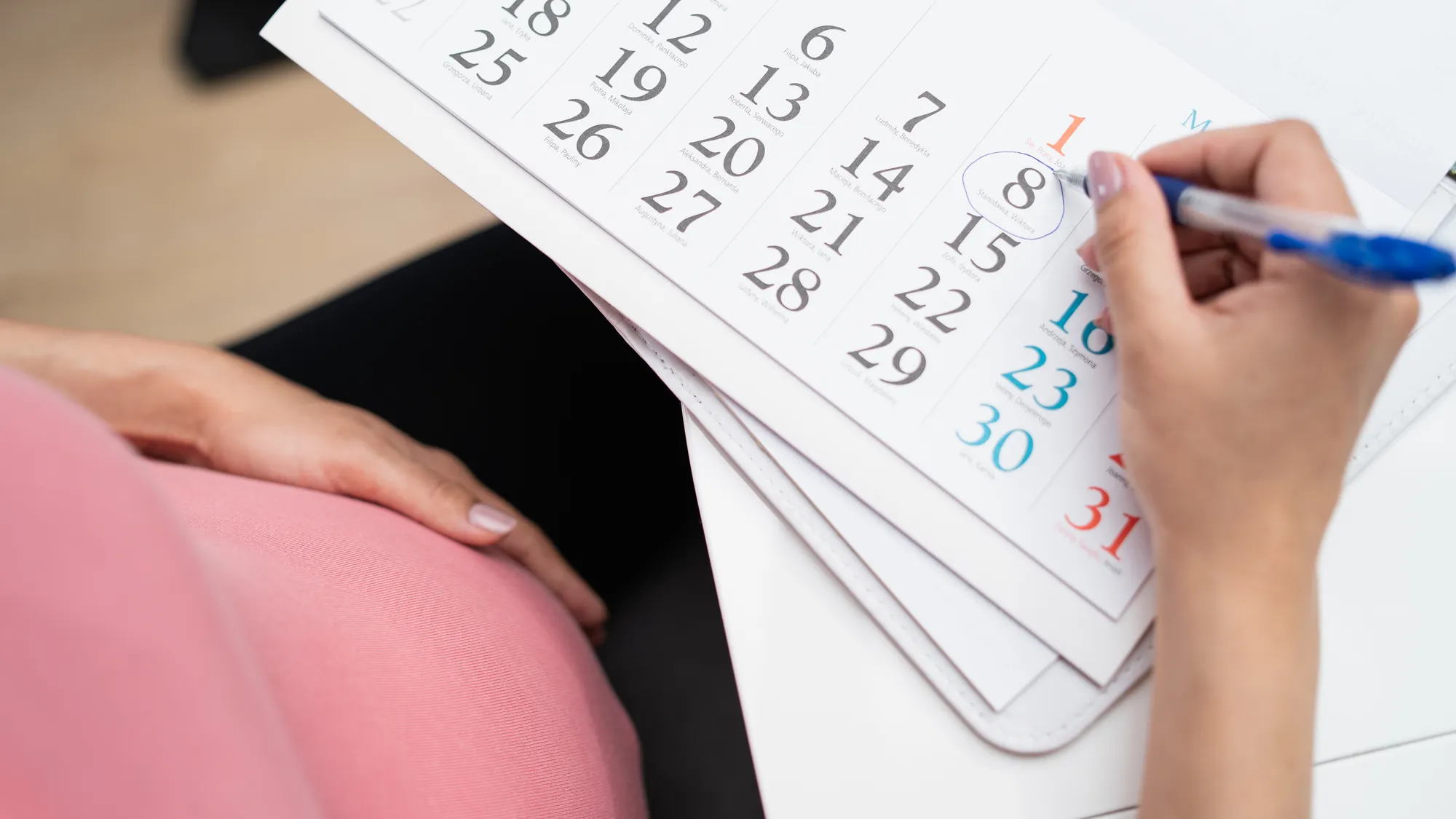
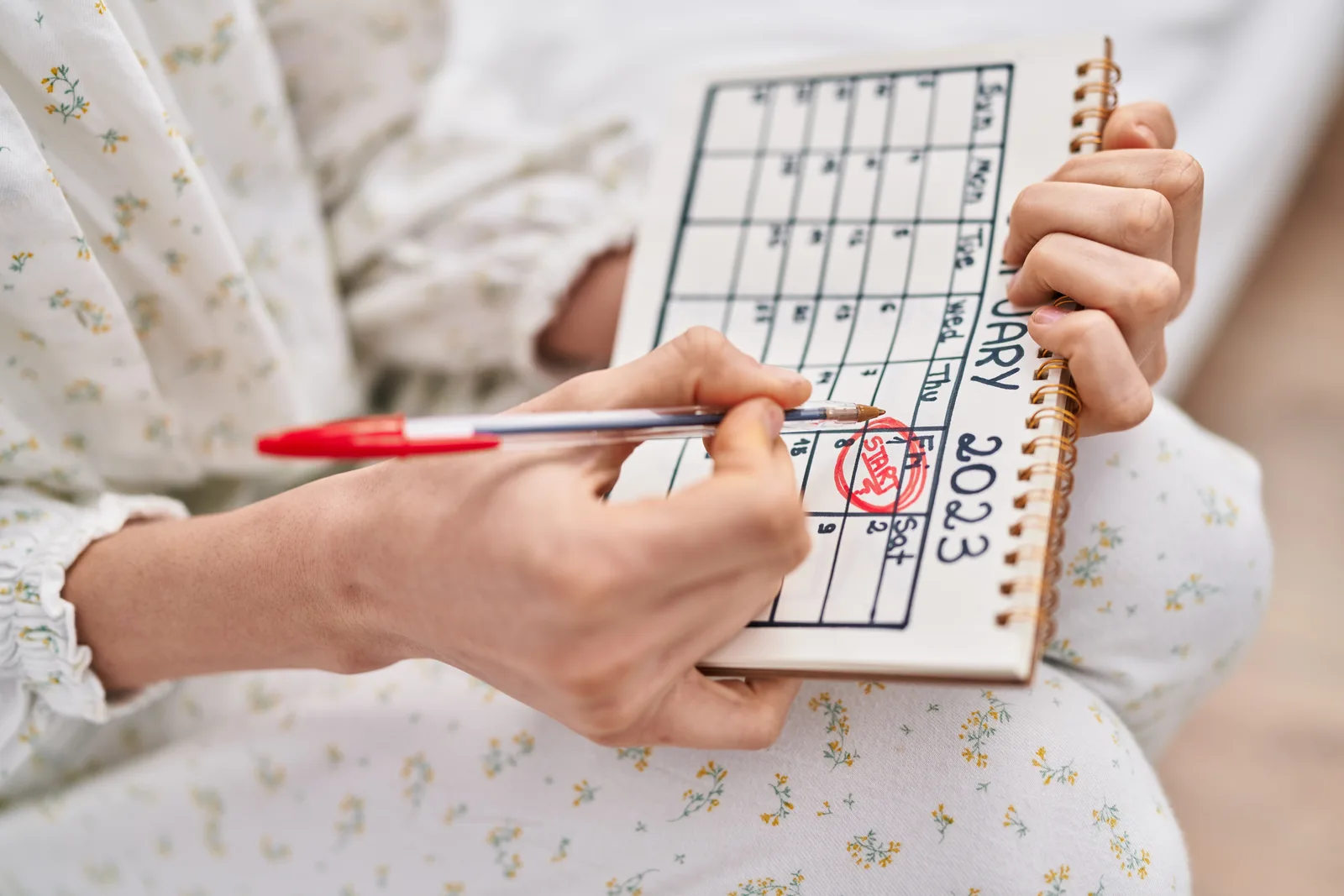
If your cycles are regular, you can estimate your fertile days with a simple calculation: subtract 14 from your average cycle length, which gives the approximate day of ovulation, and the fertile window begins 5 days earlier.
Instead of working it out by hand
- Fertile days calculator: enter the first day of your last period and your cycle length to get the fertile window, day of ovulation and date of your next period.
- Pregnancy calculator: if the test is positive, work out your due date and week of pregnancy.
| Cycle length | Approximate day of ovulation | Fertile days |
|---|---|---|
| 26 days | day 12 | days 7 to 12 |
| 28 days | day 14 | days 9 to 14 |
| 30 days | day 16 | days 11 to 16 |
| 32 days | day 18 | days 13 to 18 |
A note: the first day of the cycle is the first day of menstrual bleeding. The calendar method (and every online ovulation calculator) gives only an estimate; with irregular cycles, and in women with polycystic ovary syndrome or a thyroid disorder, it can be well wide of the mark.
Signs of ovulation: what you can notice yourself
The body sends several signals that ovulation is approaching or is taking place right now:
- A change in cervical mucus, the discharge becomes more abundant, clear and stretchy, resembling egg white. This is one of the most reliable natural signs of the fertile days.
- Mild pain or a twinge on one side of the lower abdomen (known as ovulation pain), lasting from a few minutes to a few hours.
- A rise in basal body temperature of 0,3 to 0,5 °C, but only AFTER ovulation, which makes temperature tracking more useful for confirming that ovulation is happening than for predicting it.
- Breast tenderness, increased libido and mild bloating.
LH ovulation tests
Ovulation tests from the pharmacy measure the rise in luteinizing hormone (LH) in the urine, which precedes ovulation by 24 to 36 hours. Testing begins a few days before the expected ovulation, ideally always at the same time of day. A positive test means that the next two days are the most fertile in the cycle.
An important limitation: in women with polycystic ovaries, LH can be persistently elevated, so the tests give false positive results. In that case, only ultrasound monitoring provides reliable information.
Follicle tracking, the most reliable way to monitor ovulation
Follicle tracking (folliculometry) is a series of ultrasound examinations (usually 2 to 4 within one cycle) in which the gynecologist directly follows the growth of the follicle and the thickness of the endometrium and confirms that ovulation has in fact occurred. It is the most precise method of determining the fertile days and the first step in the work-up when pregnancy does not happen, because it answers the key question: whether and when you ovulate.
At Miren Medic Polyclinic, follicle tracking and the complete work-up are carried out by Prof. Dr Snežana Rakić, a specialist in gynecology and obstetrics with several decades of experience in the treatment of infertility and in pregnancy care.
When should you see a gynecologist?
The professional recommendation is clear:
- if you are under 35, after 12 months of regular unprotected intercourse without conception;
- if you are 35 or older, already after 6 months;
- immediately, without waiting, if your cycles are irregular or absent, if your periods are markedly painful or heavy, or if you have had an ectopic pregnancy, pelvic inflammatory disease or ovarian surgery.
The work-up begins with a consultation, a gynecological examination and an ultrasound, and is supplemented as needed with hormone blood tests and follicle tracking.
Examination prices at Miren Medic clinic
| Service | Price |
|---|---|
| Follicle tracking | 6.000 RSD |
| Gynecological examination (Prof. Dr Snežana Rakić) | 12.000 RSD |
| Gynecological ultrasound (Prof. Dr Snežana Rakić) | 8.000 RSD |
| Hormone tests (laboratory) | according to the laboratory price list |
The clinic is located in Voždovac, at Vojvode Stepe 250, open on weekdays from 8 am to 9 pm and on Saturdays from 9 am to 4 pm.
Frequently asked questions about fertile days and ovulation
How many days after your period does ovulation occur?
It depends on the length of the cycle. Ovulation occurs about 14 days before the NEXT period: with a 28 day cycle that is around day 14, and with a 32 day cycle around day 18, counting from the first day of bleeding.
Is it possible to conceive outside the fertile days?
The probability is very low, but it is not zero, above all because the moment of ovulation shifts from cycle to cycle, so the "fertile window" does not always match the calculation. This is why the calendar method is not reliable contraception.
How long does ovulation last?
The release of the egg itself is a brief event, and the egg then lives for 12 to 24 hours. The fertile window is longer, around 6 days, thanks to the ability of sperm to survive for up to 5 days.
Does ovulation hurt?
Some women feel a brief twinge or a dull pain on one side of the lower abdomen. Severe, prolonged pain is not a normal finding and calls for a gynecological examination.
What does discharge look like at the time of ovulation?
Clear, abundant and stretchy, similar in consistency to egg white. After ovulation it becomes thicker and more scant.
Book an appointment
Are you planning a pregnancy, or would you like to check whether you are ovulating? Book an appointment with Prof. Dr Snežana Rakić by calling +381 64 9510 000 or through the booking page. A single examination and targeted monitoring of the cycle are often enough to give you a clear answer and a plan.
About the author
Medically reviewed by: Prof. Dr Snežana Rakić, specialist in gynecology and obstetrics. Full professor at the Faculty of Medicine in Belgrade; for many years head of obstetrics and acting director of the "Narodni front" Clinic for Gynecology and Obstetrics; areas of focus: perinatology, infertility and menopause.

Medically reviewed by
Specialist in gynecology and obstetrics