Menopause and Perimenopause Symptom Test (MRS Scale): How Severe Are Your Symptoms
Hot flushes at night, sleep that has fallen apart, a mood that swings, joints that ache in the morning: women often attribute these complaints for years to stress, work or "age", and the gynaecologist asks one question: how much do they bother you? The MRS (Menopause Rating Scale) is the standardised questionnaire used worldwide to measure the severity of perimenopause and menopause symptoms, the same one used to follow whether treatment works. Rate eleven complaints and see at once the total score, which group of complaints dominates and when it is time for an examination.
Menopause and perimenopause symptom test (MRS)
Rate each of the 11 complaints as you have felt it in recent weeks.
The result is an informative estimate and does not replace an examination and a doctor's interpretation.
Perimenopause, menopause and postmenopause: what is what
Perimenopause begins on average around 45 and lasts 4 to 8 years: the ovaries secrete oestrogen unevenly, the cycle shortens and then lengthens, and complaints are most common in exactly that period, because the hormones do not fall evenly but jump. Menopause is one date, the last period, and is established in retrospect, once 12 months have passed without bleeding; in Serbia it is on average around 50 to 51. Everything after that is postmenopause, in which hot flushes usually ease and dryness, bones and blood vessels come to the fore.
The MRS complaints therefore do not mean the same in every phase. In perimenopause a high score with an irregular cycle usually needs no hormone tests to make the diagnosis, and in postmenopause urogenital complaints most often call for local treatment. What happens in each phase and how it is treated is described in perimenopause and menopause: symptoms, phases and treatment.
How the MRS score is read
| Total score | Severity | What usually follows |
|---|---|---|
| 0 to 4 | none or minimal | yearly check-up |
| 5 to 8 | mild | advice, follow-up, targeted treatment of the dominant complaint |
| 9 to 15 | moderate | gynaecologist, treatment assessment |
| 16 and above | severe | gynaecologist, treatment without delay |
What can be done today
Menopause is not an illness, but the complaints it brings are a reason for treatment when they impair sleep, work and relationships. The gynaecologist chooses between several approaches, and the choice depends on the complaints, age, time since the last period and personal risk:
- hormone therapy (oestrogen with progesterone in women with a uterus) removes hot flushes, night sweats and sleep problems most effectively, and started before 60 or within the first 10 years of menopause it also protects the bones
- local oestrogen as a cream or pessary resolves dryness, burning and recurrent urinary infections, with negligible effect on the rest of the body
- non-hormonal medicines for hot flushes in women who must not or do not want to take hormones
- lifestyle: regular exercise, sleep, less alcohol and caffeine in the evening, and weight control, because fat tissue changes the hormones
- bone and heart checks: bone densitometry, lipids, blood pressure and glucose, because the risk accelerates after menopause
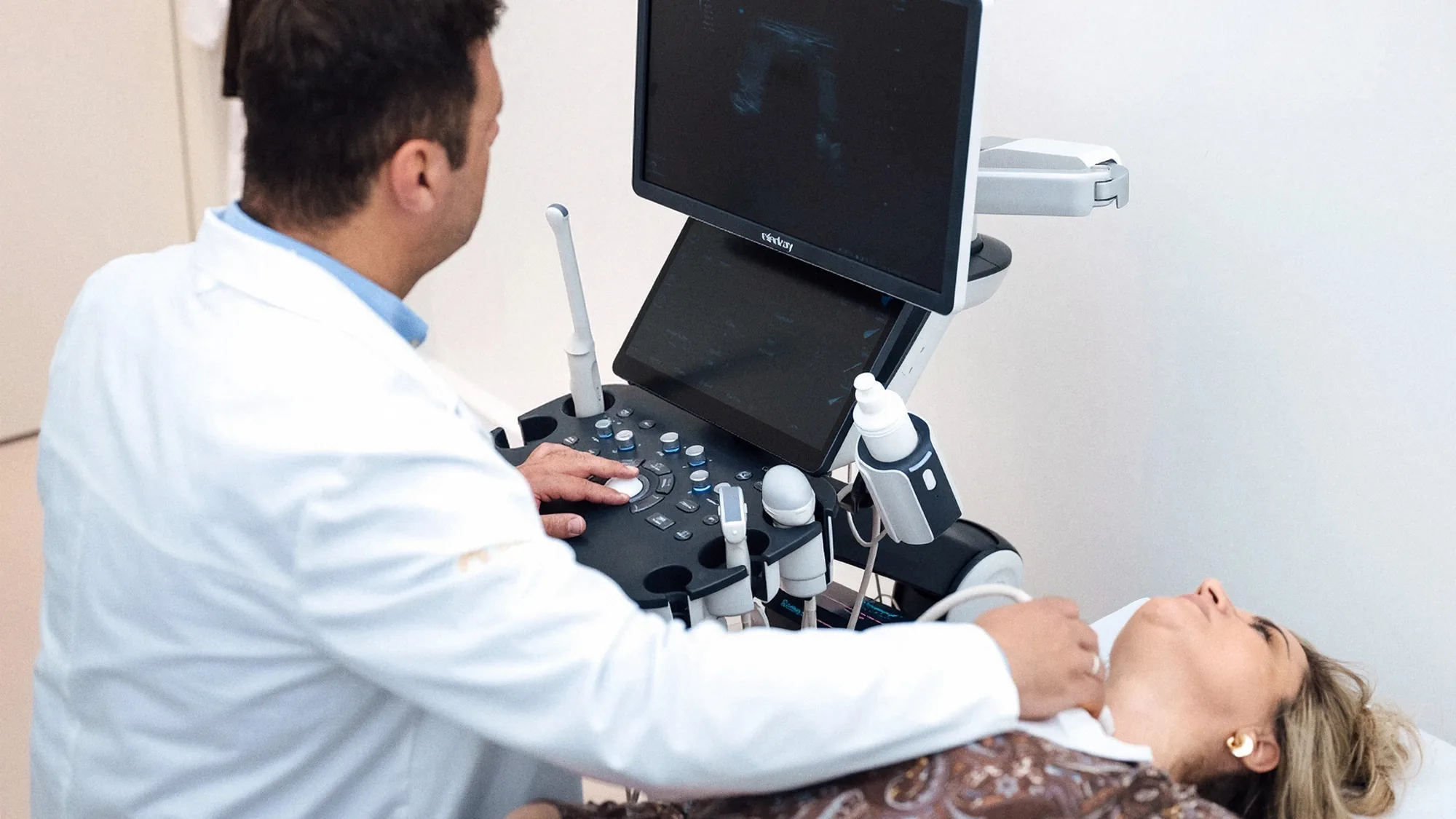
An examination with Prof. Dr Snežana Rakić at the Miren Medic polyclinic includes a talk about the complaints, a gynaecological examination and ultrasound, and when needed a hormone panel (FSH, oestradiol, AMH) and thyroid hormones, whose complaints often mimic menopause; if you suspect that, take our thyroid test too. The examination needs no referral, and the tests are done in our laboratory.
When an examination should not be put off
- bleeding after 12 months without a period, in any amount
- heavy or prolonged bleeding and bleeding between cycles in perimenopause
- menopausal complaints before 40 (premature ovarian insufficiency needs treatment for the bones and heart)
- hot flushes and insomnia that persist despite treatment, or new treatment with new complaints
- pain during intercourse, recurrent urinary infections or leaking urine: treatable, and rarely reported
Examination prices
| Service | Price |
|---|---|
| Gynecological examination | 12.000 RSD |
| Gynecological ultrasound | 8.000 RSD |
| Pap test | 2.000 RSD |
| Breast ultrasound | 8.000 RSD |
Frequently asked questions
What are the first symptoms of perimenopause?
Most often a change in the cycle (shorter, then longer gaps, heavier or lighter bleeding), then hot flushes, night sweats, worse sleep and mood changes. In many women insomnia and irritability appear first, and hot flushes only years later.
At what age does menopause start?
On average around 50 to 51, with a usual range of 45 to 55. Perimenopause starts several years earlier, on average around 45. Menopause before 40 is called premature ovarian insufficiency and is always treated.
Are hormone tests needed for the diagnosis?
After 45, with typical complaints and a changing cycle, usually not: the diagnosis is clinical. Hormones (FSH, oestradiol, AMH) are done in younger women, in an unclear picture, before treatment is started and when the thyroid, which gives similar complaints, has to be ruled out.
Is hormone therapy safe?
In healthy women under 60, within the first 10 years of menopause, the benefits of modern hormone therapy outweigh the risks, and hot flushes, sleep and dryness resolve in most. It is not for women with a previous breast cancer, thrombosis or untreated hypertension; the gynaecologist decides after an examination.
How long do menopause symptoms last?
Hot flushes on average 4 to 7 years, and in every third woman longer than 10. Urogenital complaints (dryness, infections) do not resolve on their own but worsen with time, yet are kept under control with local treatment.
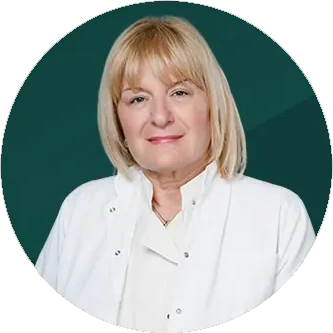
Medically reviewed by
Specialist in gynecology and obstetrics