Perimenopause and Menopause: Symptoms, Stages and Modern Treatment
Medically reviewed by: Prof. Dr Snežana Rakić, specialist in gynecology and obstetrics.
Irregular cycles after forty, hot flashes that arrive out of nowhere, sleepless nights and the feeling that you are "not quite yourself" any more, all of this can be perimenopause, the natural transitional period before menopause. The good news: the complaints of this period can be treated successfully today, and no woman has to endure them in silence. Prof. Dr Snežana Rakić, specialist in gynecology and obstetrics and one of whose areas of focus is precisely menopause, explains what happens in the body, which tests make sense and what treatment options exist.
What is perimenopause, and what is menopause?
Perimenopause is the period of hormonal fluctuation that precedes menopause. It most often begins in the middle of the forties (sometimes earlier) and lasts on average 4 to 8 years. The ovaries gradually reduce their production of estrogen, hormone levels swing from month to month, and the symptoms vary accordingly.
Menopause is, strictly medically speaking, a single date: the day on which 12 months have passed since the last period. The average age at which women enter menopause is around 51. Everything after that is called postmenopause. Menopause before the age of 45 is considered early, and before 40 premature, and it always calls for medical work-up.
In everyday speech the term "premenopause" most often means the same thing as perimenopause, the years before menopause in which the cycle and the symptoms change.
The most common symptoms of perimenopause and menopause
- Irregular cycles, shorter or longer intervals, heavier or lighter bleeding; typically the first sign of perimenopause.
- Hot flashes, a sudden sensation of heat in the face, neck and chest, often with flushing and sweating, lasting a few minutes. About three quarters of women experience them.
- Night sweats and insomnia, waking up drenched in sweat, broken sleep, morning fatigue.
- Mood changes, irritability, anxiety, low mood; in women with previous depressive episodes the complaints can intensify.
- "Brain fog", more difficult memory and concentration.
- Vaginal dryness and painful intercourse, more frequent urinary infections and urges to urinate.
- A drop in libido.
- Pain in the joints and muscles, dry skin, thinning hair.
- A redistribution of body weight, fat tissue moves towards the abdomen even with an unchanged diet.
Symptoms can begin years before the last period and last for varying lengths of time, with hot flashes lasting on average 4 to 7 years, and in some women longer.
How is the diagnosis made?
In women over 45 with typical complaints and cycles that have become less frequent, the diagnosis is primarily clinical, made on the basis of the consultation and the examination, and hormone tests are not always necessary (in perimenopause hormone values vary from week to week, so a single result can be misleading).
Tests and examinations have a clear role when other causes of the complaints need to be ruled out or general health needs to be assessed:
- FSH and estradiol, where early menopause is suspected or the picture is unclear;
- TSH (thyroid gland), thyroid disorders faithfully mimic the symptoms of menopause (hot flashes, sweating, insomnia, mood changes) and must be ruled out;
- Gynecological examination with an ultrasound, mandatory with any irregular bleeding, and especially with bleeding AFTER menopause, which is always regarded as alarming until proven otherwise;
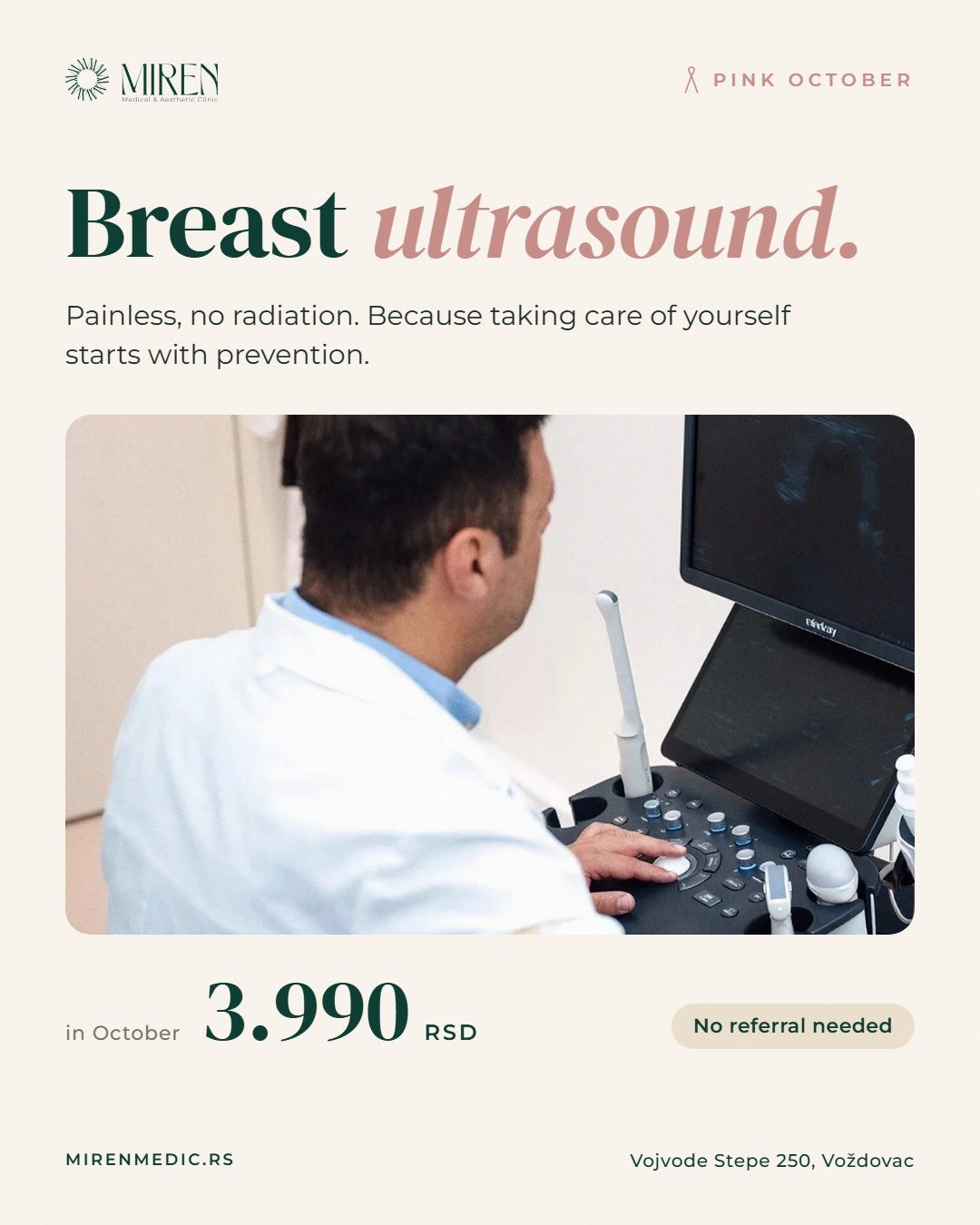
- Pap test and breast ultrasound or mammography, regular screening is not discontinued at this age, quite the opposite.
Everything listed above is available at Miren Medic clinic in one place, the examination, the ultrasound, the laboratory and breast ultrasound, along with a consultation with an endocrinologist when needed.
How are the complaints of menopause treated?
### Hormone replacement therapy (HRT)
Hormone therapy is the most effective way of treating hot flashes, night sweats and vaginal dryness, and it also has a beneficial effect on sleep, mood and bone health. The current position of the profession is this: for the majority of healthy women under 60, that is, within 10 years of menopause, the benefits of properly chosen hormone therapy outweigh the risks. The therapy is always determined individually, after an examination and a review of personal and family history (thrombosis, breast cancer, liver disease), at the lowest effective dose and with regular check-ups.
### Non hormonal options
For women who do not want to use hormone therapy or must not, effective alternatives exist: certain antidepressants in low doses reduce hot flashes, local estrogen in the form of vaginal preparations resolves dryness with negligible systemic effect (everything is decided by the doctor), and cognitive behavioral techniques have been shown to help with hot flashes and insomnia.
### A lifestyle that genuinely helps
Regular physical activity (including strength training to preserve muscle and bone), maintaining body weight, less alcohol and caffeine, stopping smoking, light layered clothing and a cooler bedroom, small measures that together make a big difference.
Menopause and long term health: bones and heart
The fall in estrogen accelerates the loss of bone mass (the risk of osteoporosis) and changes the lipid profile, which raises cardiovascular risk. This is why the years around menopause are the right moment for a comprehensive check-up: blood pressure, lipid status, blood sugar, vitamin D, and bone densitometry if needed. It is at the same time an opportunity to set out a preventive plan for the coming decade, which is precisely the philosophy behind the systematic check-ups at Miren Medic clinic.
Examination prices at Miren Medic clinic
| Service | Price |
|---|---|
| Gynecological examination (Prof. Dr Snežana Rakić) | 12.000 RSD |
| Gynecological ultrasound (Prof. Dr Snežana Rakić) | 8.000 RSD |
| Breast ultrasound (Prof. Dr Snežana Rakić) | 8.000 RSD |
| Pap test | 2.000 RSD |
| Hormone tests (FSH, estradiol, TSH...) | according to the laboratory price list |
Frequently asked questions about perimenopause and menopause
At what age does perimenopause begin?
Most often in the middle of the forties, but it can be earlier. The average age of entering menopause (12 months without a period) is around 51.
How long do hot flashes last?
On average 4 to 7 years, though the range is wide, from a few months in some women to more than ten years in others. This is exactly why the complaints should not be endured: effective treatments exist.
Can I get pregnant during perimenopause?
Yes. Until 12 months have passed since the last period, ovulation is still possible from time to time and contraception is needed if you are not planning a pregnancy.
Is hormone therapy safe?
For the majority of healthy women under 60 or within 10 years of menopause, yes, with an individual assessment and regular check-ups. The decision is made together with your gynecologist after an examination and a review of your medical history.
Which tests should be done during menopause?
As assessed by your doctor: FSH and estradiol where the picture is unclear or early menopause is suspected, TSH to rule out thyroid disease, along with a regular Pap test, ultrasound and monitoring of blood pressure, lipids and blood sugar.
Is bleeding after menopause normal?
No. Any bleeding that occurs after 12 months without a period calls for a gynecological examination with an ultrasound, without delay.
Book an appointment
You do not have to put up with the complaints of perimenopause. Book an appointment with Prof. Dr Snežana Rakić on +381 64 9510 000, Miren Medic, Vojvode Stepe 250, Voždovac. In one place: the examination, the ultrasound, the laboratory and a treatment plan tailored to you.
About the author
Medically reviewed by: Prof. Dr Snežana Rakić, specialist in gynecology and obstetrics. Full professor at the Faculty of Medicine in Belgrade; for many years head of obstetrics and acting director of the "Narodni front" Clinic for Gynecology and Obstetrics; areas of focus: perinatology, infertility and menopause.
Check it now
- Menopause symptom test (MRS): rate 11 complaints and see how severe they are and when to see a gynaecologist.

Medically reviewed by
Specialist in gynecology and obstetrics