Underactive Thyroid: Symptoms, Reading TSH and Treatment
An underactive thyroid, medically hypothyroidism, means the gland produces less hormone than the body needs. Because those hormones set the speed of metabolism, everything slows down: energy, digestion, heart rate, even thinking. The complaints are unremarkable and easily blamed on tiredness or age, which is why the diagnosis is often made only when somebody looks at a blood test. This article explains the symptoms, how to read a TSH result and what treatment actually involves.
Symptoms of an underactive thyroid
No single symptom means hypothyroidism on its own. What is characteristic is a combination of several that develops gradually, over months:
- fatigue that does not lift with rest, and a need for more sleep;
- weight gain without a change in diet, and difficulty losing weight;
- feeling cold when others are comfortable;
- dry skin, brittle hair, hair and eyebrow loss;
- constipation that appeared without a clear reason;
- slowed thinking, poorer concentration and memory, low mood;
- puffiness of the face and eyelids, a hoarse voice, a slow pulse;
- in women: heavier or irregular periods and difficulty conceiving.
An overactive thyroid, hyperthyroidism, produces the opposite picture: weight loss despite a normal appetite, a fast heartbeat, tremor, anxiety, insomnia, sweating and feeling hot. Symptoms can therefore hint at the direction of the disturbance, but confirmation comes only from blood tests.
How to read a thyroid result
The core test is TSH, a pituitary hormone that drives the thyroid. Its relationship to the thyroid hormones is inverse, and that is the key to reading the result: when the gland underperforms, the pituitary pushes harder, so TSH rises. When the gland overperforms, the signal shuts down and TSH falls. So a high TSH means an underactive gland, not an overactive one, which is the most common confusion when reading results.
| TSH | FT4 | What it usually means |
|---|---|---|
| normal | normal | The gland is working normally. |
| high | low | Hypothyroidism, an underactive gland. |
| high | normal | Subclinical hypothyroidism, a mild form that is monitored or treated depending on values and symptoms. |
| low | high | Hyperthyroidism, an overactive gland. |
| low | normal | Subclinical hyperthyroidism, requires further work-up. |
Alongside TSH, FT4 and where needed FT3 are measured, the free thyroid hormones that show how much hormone is actually available to the body. When an endocrinologist looks for the cause, anti-TPO and anti-Tg are added, antibodies that point to Hashimoto's thyroiditis, the autoimmune inflammation that is the most common cause of hypothyroidism here.
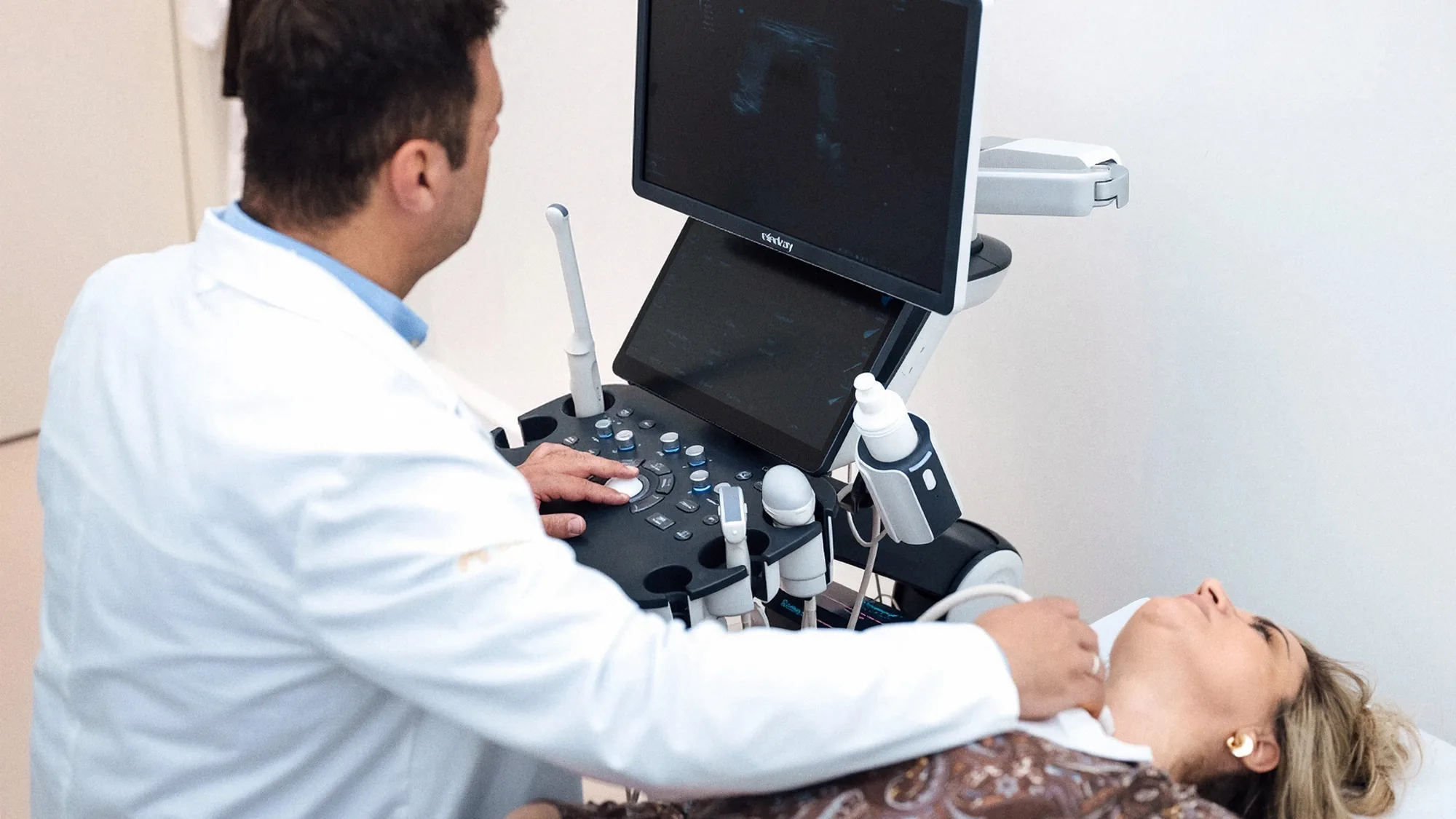
A thyroid ultrasound is a separate piece of information and does not replace blood tests. It shows the size and structure of the gland and detects nodules, but it says nothing about how the gland functions. Hormones and ultrasound answer two different questions, and only together do they give the full picture.
How to have thyroid blood tests taken
- Blood is drawn in the morning, because TSH follows a daily rhythm and peaks in the early hours.
- If you already take treatment, take that morning's tablet only after the blood draw, unless your doctor says otherwise.
- Stop biotin supplements two to three days earlier, because biotin can falsely alter the test result.
- Repeat testing after starting or changing a dose only after six to eight weeks, since values have not settled before that.
How an underactive thyroid is treated
Treatment replaces what the gland does not produce enough of, using synthetic levothyroxine. The tablet is taken in the morning on an empty stomach, at least half an hour before breakfast, and that is a condition rather than a suggestion: food, coffee, calcium and iron reduce absorption and can make a correct dose behave like an insufficient one.
The dose is set individually and adjusted against follow-up tests, usually every six to eight weeks, until TSH is brought into the target range. Once the dose is stable, checks become less frequent. In permanent hypothyroidism treatment is long term, but with a correctly set dose the symptoms resolve and quality of life returns to normal.
In subclinical hypothyroidism, where TSH is mildly raised but FT4 is normal, the decision is not automatic. The endocrinologist weighs the TSH level, the presence of antibodies, symptoms, age, pregnancy plans and other conditions, so some patients are treated and some are only monitored. This is exactly the situation in which a result must not be read on its own.
A specific note on pregnancy and pregnancy planning: hormone requirements rise, target TSH values are lower than usual, and unrecognised hypothyroidism carries risks. If you are planning a pregnancy or are pregnant, a thyroid check is not something to postpone.
Read more about how hormones affect body weight in how hormones affect weight and metabolism, and about the wider range of symptoms in thyroid gland: symptoms.
Consultation prices
| Service | Price |
|---|---|
| Endocrinology consultation (Dr Zorana Đuran) | 7.000 RSD |
| Endocrinology consultation with thyroid ultrasound (Dr Zorana Đuran) | 12.000 RSD |
| Endocrinology consultation (Dr Nemanja Nenezić) | 12.000 RSD |
| Endocrinology consultation with thyroid ultrasound (Dr Nemanja Nenezić) | 14.000 RSD |
| Thyroid ultrasound | 6.000 RSD |
Check it now
- Thyroid test: symptoms and a TSH, FT4, FT3 and anti-TPO interpreter.
Frequently asked questions
What are the symptoms of an underactive thyroid?
The most common are persistent fatigue, weight gain without a change in diet, feeling cold, dry skin and hair loss, constipation, slowed thinking and poorer concentration, and in women heavier or irregular periods. Symptoms develop gradually and none proves anything on its own, so a TSH test is needed.
Does a high TSH mean an underactive thyroid?
Yes, the relationship is inverse: when the gland underperforms, the pituitary pushes harder and TSH rises. If FT4 is low alongside a high TSH, that is hypothyroidism. If TSH is high but FT4 is normal, it is subclinical hypothyroidism, a mild form that is not treated automatically but according to the endocrinologist's assessment.
How is an underactive thyroid treated?
By replacing the hormone with levothyroxine, taken in the morning on an empty stomach at least half an hour before breakfast. The dose is set individually and adjusted against follow-up tests every six to eight weeks until TSH reaches the target range. With the right dose the symptoms resolve.
Is a thyroid ultrasound enough on its own?
No. Ultrasound shows the size and structure of the gland and detects nodules, but it does not show how the gland functions. Function is shown by blood hormones, primarily TSH and FT4. A full picture needs both.
Can you lose weight with an underactive thyroid?
You can, but only once the hormones are corrected, because untreated hypothyroidism slows metabolism and makes any regimen less effective. With treatment in place, weight loss proceeds normally. If weight keeps rising despite a normal TSH, another cause is sought, most often insulin resistance.
Book a consultation
If you recognise these symptoms or your TSH is outside the reference range, book an endocrinology consultation at Miren Medic. The consultation, thyroid ultrasound and laboratory tests are done in one place, with your results interpreted and a clear treatment plan.