Thyroid Gland: Symptoms of Hypothyroidism and Hyperthyroidism You Should Not Ignore
Fatigue that does not lift, changes in body weight without a clear reason, sensitivity to cold, or nervousness and a racing heart - these complaints are easily put down to stress and a hectic life. Behind them, however, there is often a disorder of the thyroid gland. This small butterfly shaped gland governs the metabolism of the whole body, and its disorders are extremely common, particularly in women. In this article we explain the symptoms of thyroid disease, which tests are performed and when it is time to see an endocrinologist.
What does the thyroid gland do?
The thyroid gland is located in the front of the neck and secretes the hormones T3 and T4, which regulate metabolism, body temperature, heart function, mood and energy levels. When the gland is underactive we speak of hypothyroidism; when it is overactive, of hyperthyroidism. Both conditions produce recognisable but opposite symptoms.
Symptoms of hypothyroidism (an underactive gland)
- Persistent fatigue, weakness and drowsiness.
- Weight gain despite an unchanged diet.
- Sensitivity to cold and cold hands and feet.
- Dry skin, brittle nails and increased hair loss.
- Constipation and slowed digestion.
- Facial swelling, hoarseness and a feeling of pressure in the neck.
- Low mood, reduced concentration and a slowed pulse.
Symptoms of hyperthyroidism (an overactive gland)
- Unexplained weight loss with a normal or increased appetite.
- A rapid and irregular heartbeat (palpitations).
- Nervousness, irritability and inner restlessness.
- Increased sweating and poor tolerance of heat.
- Trembling of the hands (tremor) and insomnia.
- Frequent bowel movements and a feeling of muscle weakness.
Hashimoto's and autoimmune thyroid disease
Hashimoto's thyroiditis is the most common cause of hypothyroidism and is an autoimmune condition in which the immune system gradually damages the thyroid gland. Graves' disease, on the other hand, is a common autoimmune cause of hyperthyroidism. These conditions are identified by antibody testing (for example anti-TPO) and require regular monitoring by an endocrinologist.
Thyroid nodules and enlargement of the gland (goitre)
Thyroid nodules are very common and in the great majority of cases are harmless. Even so, every nodule should be assessed by ultrasound, and by further tests where needed, in order to rule out malignant changes and to monitor its development. Enlargement of the gland (goitre) may be accompanied by a feeling of pressure in the neck or difficulty swallowing.
Which tests are performed?
- TSH - the basic test used to assess thyroid function.
- Free T3 and T4 - the levels of thyroid hormones.
- Anti-TPO and anti-Tg antibodies - these identify autoimmune conditions such as Hashimoto's.
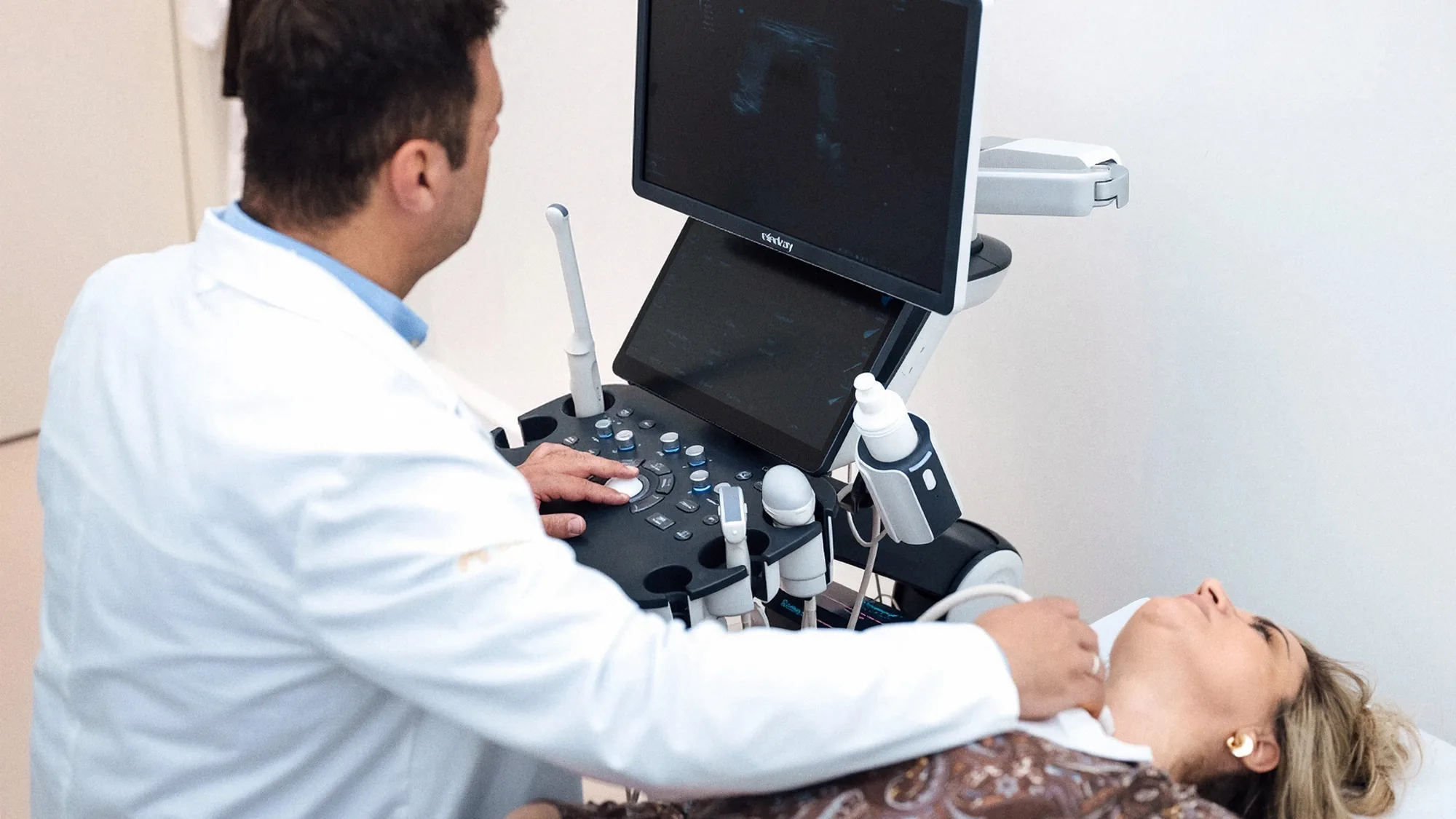
- Thyroid ultrasound - assessment of the size and structure of the gland and of any nodules.
Which tests are needed and how they are interpreted is determined by the doctor on the basis of your symptoms and results.
Who is at increased risk?
Thyroid disorders occur more often in women, during pregnancy and in the postpartum period, and in people with a family history of thyroid or autoimmune disease. Thyroid disorders frequently accompany other metabolic disorders, such as insulin resistance, so results are often considered alongside the effect of hormones on weight and metabolism.
Treating thyroid disease
Treatment depends on the type of disorder. Hypothyroidism is most often managed with hormone replacement therapy, with regular monitoring of TSH levels. Hyperthyroidism is treated with medicines that reduce hormone production and, in certain cases, by other methods. Nodules and enlargement of the gland are monitored by ultrasound, and any decision about surgery is made by the doctor. Treatment is always determined and monitored by an endocrinologist, according to the individual findings.
When should you see an endocrinologist?
If you notice several of the symptoms listed above, a feeling of pressure in the neck, or you have a family history of thyroid disease, an examination by an endocrinologist is recommended. Read more about our examinations and diagnostic services on the Endocrinology page, and you can book online at Miren Medic Polyclinic.
Check it now
- Thyroid test: tick your symptoms and interpret TSH, FT4 and FT3 from your report.
Frequently asked questions
What are the first signs of thyroid disease?
The most common early signs are changes in energy and body weight, sensitivity to cold or heat, changes in mood and sleep, and dry skin or hair loss. As the symptoms are non-specific, they are confirmed by a blood test.
Which test shows thyroid function?
The basic test is TSH. Alongside it, and at the doctor's discretion, free T3 and T4 are measured, as are antibodies (anti-TPO), together with an ultrasound of the gland.
Are thyroid nodules dangerous?
Most nodules are harmless, but every one should be assessed by ultrasound and monitored. The doctor decides whether further tests are needed in order to rule out malignant changes.
Does thyroid disease affect body weight?
Yes. An underactive gland (hypothyroidism) often leads to weight gain, while an overactive gland (hyperthyroidism) can cause weight loss. Once the function of the gland is regulated, body weight usually stabilises as well.
This article is for information only and does not replace a medical examination. For diagnosis and treatment, please consult an endocrinologist.